Saint Paul Medical Facility Cleaning
Saint Paul is built around its hospitals. Regions, United, Children’s Minnesota, and the M Health Fairview clinics anchor a dense ring of independent practices: family medicine and dental suites off Smith Avenue, physical therapy studios along Grand, imaging centers on University. Those suites need cleaning held to a clinical standard, not the office rotation a general janitorial crew runs. Patriot Building Solutions cleans Saint Paul clinics, dental offices, and specialty practices with insured, background-checked crews trained on dwell times, cross-contamination control, and the line between janitorial work and regulated waste. Our office sits in Inver Grove Heights, roughly ten minutes from most of the hospital corridor, so a same-week walk-through is normal rather than a favor.
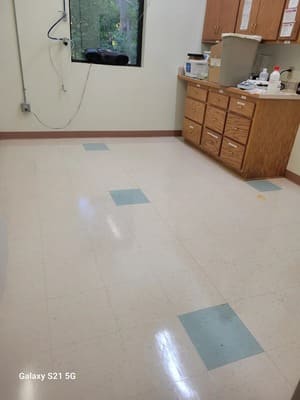
Exam Room Turnover and Terminal Cleaning
An exam room reset is a sequence, and we run it the same way every night. Disinfectant goes on the exam table and the paper-roll bar, the provider stool and guest chairs, counters, the sink basin and faucet handles, cabinet pulls, the blood-pressure cuff mount, keyboards, light switches, and both faces of the door. The product is EPA-registered and hospital-grade, and it stays wet for the full contact time printed on the label. That last part is where most vendors quietly fail. A disinfectant rated for four minutes of wet contact kills nothing if a crew wipes it dry in ten seconds, and the room still passes a visual check.
Terminal cleaning gets scoped separately from nightly turnover. When a Saint Paul practice needs a room taken all the way down after a procedure day or an isolation case, we clear it, work top to bottom so nothing settles onto a surface we already treated, disinfect every horizontal plane including the ones nobody looks at, and finish with the floor. It takes longer than a nightly pass and it is priced and scheduled that way rather than squeezed into the same window.
Cross-contamination control lives in the tools. Every Saint Paul medical account runs color-coded microfiber: restroom cloths never touch an exam counter, exam-room cloths never reach the break room, and each color is bagged, laundered, and staged apart between visits. Mop heads follow the same rule, and clinical floors get a two-bucket system that keeps clean water and dirty water separate. The system is cheap; it stays rare because it needs supervision and habit, which is the part we actually sell. Israel holds HAZMAT and First Responder certifications, and that handling discipline carries straight into a clinical space.
Regulated waste stays on your side of the line. Sharps containers and red-bag waste are handled by your own compliance program; our crews take general and recycling only, and we walk that boundary with your infection-control lead before the first shift so nobody has to guess at midnight.
Ten minutes from the hospital corridor.
Clinical standards, held every night
Exam rooms, dental operatories, and waiting areas cleaned by background-checked crews who know dwell times, color-coded separation, and where janitorial work stops.
Waiting Rooms and the Saint Paul Winter
A waiting room is the highest-transmission space in any clinic, because sick people sit in it shoulder to shoulder for an hour at a time. Nightly protocol covers chair arms and seats, the check-in counter and the pens on it, clipboards, card readers, door handles, kiosk screens, and the toy corner where a pediatric practice has one. Through respiratory-virus season we raise the frequency on those touch points, and practices that want it can add a mid-day porter pass so the room does not degrade across a twelve-hour schedule.
Then there is the floor. From November into April, Saint Paul patients carry salt slush through the door all day, and in a waiting room full of elderly and mobility-limited people a wet entry is a fall risk before it is a cosmetic problem. Salt dried onto tile also hazes white and starts working on the finish, which is a real expense in the older medical office buildings around Regions and United where the entry flooring is original. Our winter scope adds heavier walk-off matting, entry checks whenever a porter is on site, and a salt-neutralizing mop pass at close so residue never builds in the one room every patient sees.
Restrooms in a public-facing clinic are checked and logged more than once a day. Fixtures get the same hospital-grade product used in the exam rooms, floors get the two-bucket method, and dispensers are refilled before they run dry rather than after a patient finds them empty.
Dental Suites, Therapy Studios, and Shared Medical Buildings
The practices around Saint Paul’s hospitals are not interchangeable. A dental or orthodontic office adds operatories, a sterilization area, and a lab bench to the usual reception and restroom scope. A physical therapy studio brings mat tables, hand equipment, and hard traffic on the floor rather than a room-by-room cycle. Imaging centers have equipment surfaces nobody outside the practice should be touching at all. We scope each suite on its own instead of running one checklist across a building, so the operatory gets operatory-grade attention while a shared corridor gets whatever frequency its traffic actually justifies.
Scoping that way is also how the boundary stays clean. Instrument trays, sterilization equipment, and anything inside a decontamination zone remain with your staff and your protocol. We take the floors, general surfaces, restrooms, and common areas around them to a documented standard. Settling that in writing during the first walk-through keeps a medical account calm for years instead of turning into a monthly negotiation over who was supposed to wipe what.
Plenty of Saint Paul suites sit inside older multi-tenant medical office buildings near the hospitals, where a landlord’s vendor handles the corridors and each practice arranges its own interior. We work either side of that split, and the protocol inside your door stays clinical either way.
Documentation, Crew Continuity, and After-Hours Access
Medical practices work under HIPAA and OSHA bloodborne-pathogen rules, and often under payer or accreditation requirements on top. Our crews are trained on the parts that touch cleaning: correct PPE, correct disinfectant handling, correct waste boundaries, and a hard rule that patient records are never read, moved, photographed, or discussed. Screens and paperwork are left exactly as found. For practices that want it, we keep a written cleaning and disinfection log recording what was treated, when, and by whom, so there is a record ready for a survey or an audit instead of a scramble.
The crew assigned to your practice is the crew that keeps showing up. Every member is a W-2 employee background-checked before ever entering a clinical space, and practice managers here know their cleaners by name. In a building where staff have gone home and the alarm is armed, an unfamiliar face should be an event, never routine. That continuity is most of why 99.5% of our customers have stayed with us across three years.
Scheduling follows your patient hours, not ours. Most Saint Paul clinics are cleaned in the evening after the last appointment so rooms are reset overnight and ready for the morning schedule; urgent-care and extended-hours sites get a window matched to when they actually close, weekends included. Price tracks the clinical-space ratio, since a suite that is mostly exam rooms carries more work than one that is mostly reception, and you get a written scope after the walk-through with no surprise line items for everyday consumables. Call Israel and he will come look at the space himself.
Ready for Saint Paul medical facility cleaning?
Call us, send a message, or browse our gallery to see real Twin Cities projects.
Saint Paul Medical Facility Cleaning FAQ
Do you clean Saint Paul clinics to healthcare disinfection standards?
Yes. EPA-registered hospital-grade disinfectants held for the full label dwell time, color-coded microfiber, a two-bucket clinical mopping method, and background-checked crews trained on OSHA bloodborne-pathogen and HIPAA basics. Exam rooms, waiting areas, restrooms, and lab spaces each get their own scoped protocol.
What dwell times do you actually follow?
The label’s. Whatever the manufacturer registered, one minute or ten, the surface stays wet that long, and anything that dries early gets re-wetted.
How do you handle medical waste?
Sharps and red-bag waste stay with your facility under its own compliance program. Our crews take general and recycling waste only, and we set that boundary with your infection-control lead before the first shift.
Can you keep a cleaning log for audits?
Yes. For practices that ask, we keep a written cleaning and disinfection log noting what was disinfected, when, and by whom, so documentation is ready for a survey, payer audit, or accreditation review.
Do you do terminal cleans, or only nightly turnover?
Both, scoped separately. A terminal clean means the room is cleared and taken down top to bottom, every horizontal surface treated, floor last. It needs its own time block, so we schedule it apart from the nightly pass.
Are your crews background-checked?
Every one, before they ever enter a clinical space. They are W-2 employees, not day labor, and the same crew stays on your account, so you are not getting rotating strangers in your suite after hours.
Can you work around our patient schedule?
Yes. Most Saint Paul practices are cleaned after the last appointment so rooms are disinfected overnight. Urgent-care and extended-hours sites get a schedule matched to their real closing time, weekends included.
Can you service a suite inside a shared medical building?
Yes, and it is common near the hospitals. We can clean your suite alone and coordinate with the building’s common-area vendor, or cover both. Clinical protocols inside your door do not change either way.
How does winter change the scope?
Salt slush comes through the door all day from November into April, and in a waiting room full of elderly patients a wet floor is a fall risk. We add heavier matting, entry checks where a porter is on site, and a salt-neutralizing mop pass at close.
Other Saint Paul Commercial Cleaning Services
View all Saint Paul, MN services · See our work · Get a free quote
Service Area: Saint Paul, MN
We cover every Saint Paul neighborhood, from the hospital corridor and the Smith Avenue clinics to the Grand Avenue and University Avenue practices, Highland Park, and the downtown core.