Lakeville new builds need three phases of cleanup: rough clean before finishes, final clean before the handoff, and the touch-up clean after the builder walkthrough. Skipping the professional pass leaves dust under flooring and chemical residue on surfaces. HAZMAT-certified crews handle construction chemicals the right way. Builder clean is priced per square foot.
Lakeville is moving. Avonlea keeps filling in lot by lot, Spirit of Brandtjen Farm runs a steady pipeline of new homes, and the 35W and 185th Street commercial zone is putting up new buildings faster than most crews can keep up with. I have been on enough of these sites to tell you the same thing every time: the build is only finished when the dust is gone. A house or a build-out is not move-in ready because the punch list is signed off. It is ready when a homeowner or a tenant can run a hand along a windowsill and not come away with drywall powder on their fingers.
I am Israel Martinez. I run the crews at Patriot Building Solutions, I am HAZMAT certified, and I came up through the Marines before Six Sigma. That background is not decoration. It is exactly how we treat a post-construction job: a sequence, done in order, with no shortcuts and no surprises at handoff. Here is what the three phases look like on a Lakeville new build, where general contractors get burned when they skip the professional clean, and why the chemical side of this work matters more than most people think.
Phase One: The Rough Clean
The rough clean happens after the heavy work is done and before the finishes go in. Framing is up, drywall is hung and finished, electrical and plumbing rough-in is complete, and the mechanicals are set. At this point the space is full of debris: drywall scrap, cut-off ends, packaging, and a thick layer of fine dust on every surface. Our crew HEPA-vacuums the whole interior, bulk-removes the construction debris and packaging, sweeps the subfloor or concrete, and wipes down doors and millwork. On the 35W corridor commercial builds, this phase also means clearing the dust load out of the bays before paint goes up. The point of the rough clean is simple: give the finish trades a clean substrate so paint, cabinets, and flooring do not lock construction dust in underneath them. On a typical Lakeville build-out we are looking at one to two days for the rough phase.
Phase Two: The Final Clean
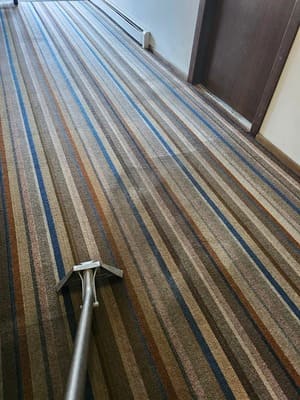
The final clean is the detailed pass after every finish is installed. This is the phase people picture when they hear “post-construction cleaning,” and it is where the precision matters most. We clean every surface top to bottom: walls, ceilings, doors, windows inside and out, and all the fixtures. We polish stainless and chrome, scrape paint splatter off glass with a razor, pull every label and sticker off doors and appliances, and remove the adhesive residue underneath them. Hard floors get mopped and burnished, carpet gets vacuumed and extracted, restrooms and break areas get sanitized, and every switch plate and electrical fixture gets cleaned. In a Holyoke Ave development home or an Airlake Airport industrial build, the final clean is the difference between a space that looks finished and a space that is actually clean. Budget two to four days for the final phase on a standard build.
Phase Three: The Touch-Up After Walkthrough
The third phase is the one most crews forget, and it is the one that protects the builder’s reputation. After the GC walkthrough, and again after the homeowner or tenant walkthrough, somebody always finds something: a smudge on a window, dust on top of a door frame, a fingerprint on a freshly painted wall. The touch-up clean catches all of it before keys change hands. We coordinate this with the builder’s schedule so it lands right before the handoff. On the fast-moving Avonlea and Spirit of Brandtjen Farm closings, this phase is what keeps a builder from getting a punch-list complaint on closing day. It is a short pass, but it is the one that makes the whole job land clean.
Mistakes GCs Make When They Skip the Professional Clean
I have walked into plenty of jobs where a general contractor handed cleanup to the framing crew or the laborers on hand to save a line item. It almost never saves money. The most common mistake is letting drywall dust settle into carpet before the final extraction. Once it is ground in, it takes multiple HEPA passes plus deep extraction to pull it back out, and that costs more than the original clean would have. The second mistake is leaving label adhesive on windows and fixtures until it cures hard, which then needs a citrus solvent and a careful wipe instead of a simple peel. The third is concrete dust setting into tile grout, which can need a grout-haze remover or even an acid wash if it is left long enough. And the fourth is the worst one: leaving construction chemical residue on surfaces because the crew that “cleaned” did not know what they were dealing with. That is where certification stops being a talking point and starts being the whole job.
Why HAZMAT-Certified Crews Matter on Construction Chemicals
A new build is full of chemicals before anyone moves in. Adhesives, sealers, grout haze removers, solvents, paint and finish residues, and the fine particulate left behind from cutting and sanding. Most of it is harmless once it is gone, but getting it gone correctly is the part that requires training. A crew that does not understand what is on a surface can spread a residue around, mix two products that should never touch, or wipe down a space and leave a film a homeowner breathes for weeks. Because I am HAZMAT certified, my crews know which residues need which approach, how to handle and dispose of what comes off a surface, and how to leave a space genuinely clean instead of just looking clean. We pair that with eco-friendly chemicals so a family or a staff is not moving into a space that smells like a chemical warehouse. On the Airlake Airport industrial builds and the 35W commercial jobs especially, where you are dealing with larger finished surfaces and more aggressive construction products, that certification is the reason the handoff clean is actually safe.
What the Handoff Clean Should Include Before Keys
Before a homeowner or tenant gets keys, the space should pass the white-glove test. Every window streak-free inside and out, every surface dust-free including the high spots people forget, every floor finished and ready to walk, every fixture and switch plate wiped, every label and adhesive spot gone, and every restroom and kitchen sanitized. No solvent smell, no construction film, no powder on the windowsills. That is the standard we hold every job to, and it is the same standard whether it is a single Avonlea home or a Holyoke Ave commercial build. You can see the finished results on our project gallery, and the full scope is laid out on our post-construction cleaning page.
What the Phases Will Run in Lakeville
Lakeville post-construction cleaning is priced per square foot across the three phases for a typical build. A 5000 sq ft build-out covers the full rough, final, and touch-up sequence. Higher-finish spaces with custom millwork and premium surfaces run higher because they take more careful handwork. Simpler spaces with hard floors and basic finishes run lower. What the phases will run on your specific job depends on the square footage, the finish level, and the schedule, and we put a real number to it after a walkthrough with you. Everything we do is handled by W-2 crews who work for us directly, not day labor, so you know who is in your building. We are insured and bonded, HAZMAT certified, and we use eco-friendly chemicals on every job.
Lakeville Post-Construction Cleaning FAQ
How much does post-construction cleaning cost in Lakeville?
Lakeville post-construction cleaning is priced per square foot across the rough, final, and touch-up phases. We give you a real builder clean price after a walkthrough of the site.
How many phases of cleaning does a new build need?
Three. Rough clean before finishes go in, final clean before the handoff, and a touch-up clean after the builder and homeowner walkthrough. Skipping any of them tends to cost more later, especially when drywall dust grinds into carpet before extraction.
Why does HAZMAT certification matter for post-construction cleaning?
New builds leave behind construction chemicals: adhesives, solvents, sealers, and fine particulate. A HAZMAT-certified crew knows which residues need which approach and how to remove and dispose of them safely, so the space is genuinely clean and safe before anyone moves in, not just clean-looking.
Do you coordinate with our general contractor’s schedule?
Yes. We walk the site with the GC up front, schedule the rough clean after the rough construction milestone, hit the final clean after final inspection passes, and run the touch-up right before the handoff. Coordinating the phases shrinks the total cleanup window and keeps closings on track.
Do you use your own crews or subcontractors?
Our own. Every Patriot Building Solutions crew member is a W-2 employee who works for us directly, not day labor or subs. We are insured and bonded, HAZMAT certified, and we use eco-friendly chemicals on every Lakeville job.
Building in Lakeville? Get Your Builder Clean Scheduled.
W-2 crews, HAZMAT certified, insured and bonded, eco-friendly chemicals. We coordinate every phase with your build schedule.
Schedule a Walkthrough (651) 412-3830Read our full Post-Construction Cleaning page · More posts · Get your builder clean price