Apple Valley Floor Stripping
By the end of a Minnesota winter, vinyl tile floors in Apple Valley tend to look tired in the same way. The shine is gone at the entrances, a gray haze sits in the traffic lanes, and mopping stops bringing it back. That haze is usually old finish holding salt and grit, and the fix is to take the finish off and lay new coats down. We strip and refinish VCT and other resilient floors in clinics, schools, break rooms and retail backrooms, on a schedule that keeps your doors open.
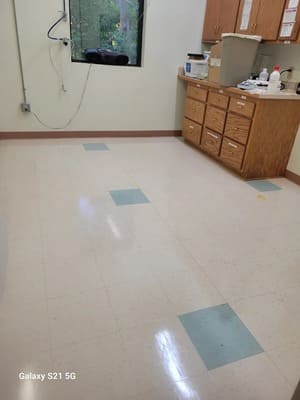
What a Full Strip Involves, Start to Finish
Before any chemical goes down, we test a small patch in a corner. Some buildings carry years of finish laid by different vendors, and a few have a sealer coat underneath that an ordinary stripper barely touches. That test spot tells us how many passes the floor will take and how long the room will be down, which is the number you actually need when you plan around the work.
A strip is slow work on purpose. Furniture comes out, the room gets taped off, and a stripper mixed for the finish you have goes down on the tile. Then it sits. Stripper needs dwell time to soften the old coats, and a crew that scrubs too early just pushes the top layer around while the bottom coats stay bonded. Once the finish lets go, a floor machine with a stripping pad scrubs it loose and a wet vac pulls up the slurry.
Rinsing is the step people underrate. Stripper is alkaline, and any residue left behind keeps the new finish from bonding, so the floor gets rinsed, neutralized and rinsed again until it is clean and dry. Edges get hand work, because a machine never quite reaches the line where tile meets cove base.
Only then does finish go down. We lay four to six thin coats and let each one dry before the next, since a single heavy coat dries cloudy and soft. The last coat has to cure before carts and shoes come back.
Winter
Salt film dulls a finish long before it wears through
Slush off the parking lot dries on entry tile as a white film. It scratches, it clouds, and it hangs on until somebody takes the finish off.
Timing the Strip Around the Melt
From November through March, every lobby along Cedar Avenue takes in slush from its parking lot. Salt dries on vinyl tile, and foot traffic grinds it into the top coats of finish. You can mop daily and still watch the entrances go dull, because by then the salt is in the finish itself.
Stripping in January rarely makes sense. A fresh finish laid down in the middle of salt season starts taking damage the first week, and you end up paying for a floor that looks worn by the time the snowbanks go. For most Apple Valley buildings the better plan is to protect the floor through winter with walk-off matting and damp mopping with a neutral cleaner, recoat the worst lanes if they need it, and book the full strip after the melt, once the spring grit has been swept out.
Schools and clinics with a quiet stretch on the calendar often take the first open weekend in spring. We get it on the schedule early so it does not slide into summer.
Israel Martinez, a Marine Corps veteran, owns the company and carries Six Sigma and HAZMAT training. Every person on your floor has cleared a background check.
A Recoat Buys Time. A Strip Starts Over.
Plenty of dull floors can skip the full strip. A scrub-and-recoat takes a floor machine to the top coats only, cleans off the worn surface and lays two fresh coats over the sound finish underneath. It is faster, it uses far less chemical, and it can carry a floor a good while between strips.
The test is what sits under the dull layer. If dirt is trapped inside the finish, showing up as dark lanes that stay dark after a scrub, a recoat only seals it in. Traffic that has worn through to bare tile at the doors is the other giveaway, since new coats bond poorly where the old finish is gone. Yellowed buildup along the walls usually points the same way. When we see any of that, we tell you the floor needs a strip.
Burnishing handles the day-to-day. A high-speed burnisher run over a cured finish polishes the surface and brings gloss back without adding anything. A busy clinic corridor may want it weekly, and a break room far less often.
Closing the Room While the Finish Cures
A floor under fresh finish is a closed floor. Shoes leave prints that stay until the next strip, and a cart pushed across a soft coat leaves tracks you will be looking at for months. So the first conversation is about when you can give up the room.
For offices and retail backrooms that usually means overnight or a weekend. A small exam room can come out of service for an evening and be ready for the first patient the next morning. A school hallway or a big break room gets split into sections, one half on a Friday night and the other the next weekend, so there is always a dry path through the building. We mark the wet zone, block it off physically, and leave only once the last coat can take foot traffic.
Furniture gets lifted back into place, and anything missing felt pads gets them. Your hours go into a written plan so your staff knows which doors are closed and when.
Got a floor that went dull in February?
We walk it, tell you whether it needs a strip or a recoat, and put a price in writing.
Traction Matters More Than Gloss
A shiny floor people slip on is a liability. Commercial finishes are made to keep their grip when they go down thin and fully cured. Trouble starts with shortcuts, like finish laid over stripper residue or too much finish in one coat. A mop bucket that never gets changed does its own damage by leaving a sticky film that catches dirt and shoes.
We use finishes made for commercial foot traffic and follow the maker’s coat thickness and dry times. Green chemistry is our default wherever it does the job, and if your building has its own approved products, we work with yours. At entrances, the best slip protection is still a dry floor, one more reason walk-off mats earn their keep in an Apple Valley winter.
Daily care decides how long a new finish lasts. A dust mop run before the wet mop, clean water and a neutral cleaner will keep a strip looking good far longer than any extra coat we could add.
Floor Stripping Questions From Apple Valley Buildings
How often does a commercial VCT floor need a full strip?
It depends on traffic and upkeep. Busy entries and corridors need one sooner than a quiet office suite, and regular burnishing plus a scrub-and-recoat between strips stretches the interval. We look at your floor in person and tell you what it needs now, and what can wait.
How long is the room out of service?
Plan on giving up the room for an evening or a weekend, depending on size and how many coats go down. Larger areas get worked in sections so you keep a dry path through the building, and we tell you before we start when it can take foot traffic again.
Can you strip floors while our business is open?
Yes, by working in sections after hours or on weekends. The wet zone is blocked off and signed, and the rest of the building stays usable. Clinics and offices usually prefer overnight work so staff and patients never see the floor closed during the day.
What kinds of floors do you strip and refinish?
Vinyl composition tile is most of it, along with other resilient floors whose maker allows a coat of finish. Some luxury vinyl and rubber floors are not meant to carry finish at all, so we check the floor type during the walkthrough before anything gets stripped.
Will the new finish make the floor slippery?
A properly applied commercial finish should not. Slick floors usually come from residue left under the finish, coats laid too thick, or dirty mop water. We rinse and neutralize after stripping and follow the maker’s coat and dry times so the floor keeps its grip.
How is the price for a strip set?
Square footage, the condition of the old finish, how much furniture has to move, and whether the work runs in sections all drive it. We walk the floor first and give you a written price for free, before anything gets scheduled or signed.
More of Our Work in Apple Valley
Finished floors from past jobs are in the gallery, and a free quote starts with a look at your tile.
Floors We Reach Across Apple Valley
Clinic halls, school wings, break rooms and retail back rooms all over Apple Valley are a short drive from our shop in Inver Grove Heights. Call (651) 412-3830 and we will set a time to look at your floor.